WARNING: These are summaries, not reviews, and may contain story spoilers.
Click on these links for publication details of editions used for indexing

WARNING: These are summaries, not reviews, and may contain story spoilers.
Click on these links for publication details of editions used for indexing
|
|
Donald Thomas"The Case of a Boy's Honour" (2010) |
|
|
"The Case of Peter the Painter"
(2009) Piatkoff taunts Holmes from the street. Watson, who had seen him, is sent out with two police officers to try to identify him. Holmes and Lestrade liaise with Mycroft, Holmes engages in a project which seems to involve soldering, and makes contact with the magician Chung Ling Soo. Arrests are made and suspects released. Mycroft, Churchill and Wodehouse visit Baker Street with news that a mass assassination plot is being fomented, and Watson follows them to Sidney Street, where no 100 is surrounded by armed police. With the house under siege, a gun battle begins between the anarchists and the police, with a Scots Guards regiment brought in as reinforcements. Holmes enters the besieged building to rescue a girl. The siege ends in a fire. It is only some time later that Holmes reveals his full role in the events to Watson. |
 |
|
 |
"The
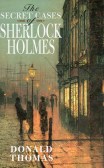
Case of the Blood Royal" (1997) More than twenty years earlier: Holmes is called on by Sir Arthur Bigge. Prince George and the Duke of Clarence are being blackmailed over correspondence to "women of a certain kind". The blackmailer is working through an agent, Charles Augustus Howell. Holmes meets Howell in Hyde Park and sets Watson the task of following him, giving Watson his first sighting of Professor Moriarty. He and Lestrade set up watch from Camden House while Holmes meets with the blackmailers at 221B. Moran enters the fray, and Holmes carries out a burglary. |
|
| "The Case of the Camden Town Murder"
(1997) Included in: The Secret Cases of Sherlock Holmes (Donald Thomas) Story Type: Pastiche Canonical Characters: Sherlock Holmes; Dr. Watson; Mrs Hudson Historical Figures: Frederick Edwin Smith; Sir Edward Marshall Hall; Robert MacCowan; William Westcott; Ruby Young; Walter Sickert; Inspector Arthur Neil; (Lady Ethel Hall; Emily Dimmock / Phyllis Shaw; Bertram Shaw; Robert Wood; Joseph Lambert; John Corlett; Sir William Grantham; Sergeant Page) Other Characters: Cab Drivers; Ruffianly Callers; Crowds Outside Central Criminal Court; (Liverpool Ruffian; Young Lady on Tram; V.V. Bread Company Gatekeeper) Date: One evening in the very last months of the nineteenth century / September-October, 1907 Locations: 221B, Baker Street; Euston Road 225; Hampstead Road; Camden Town; St Paul's Road; Camden Town Station; Central Criminal Court; Café Royal; Sickert's Studio Story: Holmes advises F.E. Smith after he accidentally kills a man in Liverpool. Over the ensuing years, Smith sends Holmes a number of cases. In 1907, Holmes is called upon by Arthur Newton, whose client, Robert Wood has been accused of the murder of Emily Dimmock in Camden Town. |
|
|
|
"The
Case of the Crown Jewels" (1997) In 1907 Lestrade asks Holmes to travel to Dublin to check the security arrangement's for Edward VII's upcoming visit. While he is there, he views the security arrangements at the Bedford Tower, where the Irish crown jewels are kept. He and Watson return to Dublin two months later after hearing that a key to the Tower has gone missing. Shortly thereafter, the crown jewels are stolen. |
|
|
"The Case of the Ghosts at Bly"
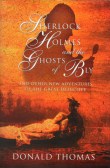
(2010) Holmes and Watson travel to Broadmoor to interview Victoria. After the interview they visit King Alfred's School to learn the reason for Miles's dismissal. They learn of the murder of a mill-owner and theft of his gold near a circle of standing stones close to Bly House. At Bly, they talk with Mrs Grose, the housekeeper. A visit to Somerset House confirms Victoria's innocence for Holmes, but he announces that there is still a murder to be solved and turns to a study of occult texts. He lays a trap at a seance with a severed head illusion. Holmes teams up with Gregson and Swain. A dead greyhound, a train journey and a night-time stakeout on the lake at Bly bring the case to an end. |
 |
|
 |
"The Case of the Greek Key (2007) NOTE: Alfred Swain is a character in a series of books by Donald Thomas. |
|
|
"The Case of the Hygienic Husband"
(2001) |
 |
|
|
|
"The
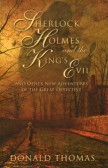
Case of the King's Evil" (2009) Included in: Sherlock Holmes and the King's Evil (Donald Thomas) Story Type: Pastiche Canonical Characters: Sherlock Holmes; Dr. Watson; Mrs Hudson; (Inspector Lestrade; Mycroft Holmes) Historical Figures: (King John) Other Characters: Alice Chastelnau; Reverend Roderick Gilmore; Inspector Albert Wainwright; Wainwright's Constable; Roland Chastelnau; Dr Rixon; Corpse Carriers; Freiston Shore Relief Beacon Keeper; Gilmore's Maid; Bridge Hotel Waiter; Openshaw Maid; Abraham Chastelnau; (John Chastelnau; Alice's Mother; Alice's Step-Mother; Miss Openshaw; Sutton Cross Sexton; Mrs Armitage; Replacement Keepers; Collier Skipper; Tinker) Date: October, 1884 Locations: 221B, Baker Street; Lincolnshire; Sutton Cross; Old Light Beacon; St Clement's Church; A Train; Cambridge; Ely; Norfolk; King's Lynn; Sutton Cross Station; Bridge Hotel; Sutton Cross Rectory; The Mud Flats; Mablethorpe; Book-in-Hand Inn; Openshaw Academy for Young Ladies Story: Watson is called on by schoolteacher Alice Chastelnau, whose brothers have disappeared, leaving only a letter addressed to an unnamed doctor in which Abraham writes of an evil affliction, and a pebble wrapped in paper. The brothers are keepers of the lighthouse beacon on the river estuary at Sutton Cross on the Wash. Their disappearance was discovered when the light failed. The Rector and Sexton of Sutton Cross had noticed two men figting on the mud-flats as the tide was coming in. Holmes examines the pebble, waking the house with the screams of his grinding wheel, and identifies it as a sapphire. They travel to Lincolnshire and interview the rector, a university contemporary of Mycroft's. Holmes makes a connection between the events in Lincolnshire and those in a play by Shakespeare. They examine the beacon, and witness the discovery of the body of one of the brothers. In the evening they venture onto the mud-flats to view the site of the brothers' argument, and their lives are put in danger by the incoming tide, a danger that helps them deduce the fate of the other brother, and locate the source of the argument. Holmes again interviews the rector, to learn more about local history. They visit Miss Chastelnau, and Holmes disproves Watson's theory and reveals the truth, and the nature of the "King's Evil" that afflicted Abraham Chastelnau. |
|
| "The
Case of the Matinee Idol" (2010) Included in: Sherlock Holmes and the Ghosts of Bly (Donald Thomas) Story Type: Pastiche Canonical Characters: Sherlock Holmes; Dr. Watson; Mrs Hudson; Inspector Bradstreet; Stanley Hopkins; Historical Figures: (Arthur Munby) Other Characters: Messenger Boy; Cabbie; Regent Street Crowd; Carnaby Jenks; Theatre Constables; Madge Gilford; William Gilford; Sir Henry Caradoc Price; Sergeant Witlow; Constable Royston; Mr Roscoe; Garrick's Head Patrons; Roland Gwyn; New Year Revellers; (Dr Worplesdon; Dr Hammond; Lady Myfanwy Price; Actors; Harry Squire; Cafe Boucherat Waiter; Monsieur Boucherat; Alfred Cranleigh; Molly) Date: New Year's Eve Locations: 221B, Baker Street; Regent Street; The Strand; Royal Herculaneum Theatre; Bow Street; The Garrick's Head Story: Holmes and Watson are called to the Herculaneum Theatre by Jenks to investigate the murder of the actor-manager Caradoc Price. He had apparently been poisoned during the final scene of Hamlet, and died, locked in his dressing room, before the final curtain call. Cigar ashes and a puzzle on a torn piece of newspaper provide clues, but Holmes's client, Jenks, seems intent on convicting himself of the murder. Holmes's solution involving an unlatched theatre door, presented to Hopkins and Bradstreet, skirts around the truth. |
|
|
|
"The
Case of the Missing Rifleman" (1997) Included in: The Secret Cases of Sherlock Holmes (Donald Thomas) Story Type: Pastiche Canonical Characters: Sherlock Holmes; Dr. Watson Historical Figures: Annie Bella Wright; Ronald Light; George Measures; Dr Edward Williams; Constable Alfred Hall; Sir Edward Marshall Hall; Valeria Craven; Muriel Nunney; Henry Clarke; (Archie Ward; James Evans; Archibald Bowker; Enoch Whitehouse; Joseph Cowell; Robert Churchill) Other Characters: Date: 5th July, 1919-March, 1920 Locations: Leicestershire; Stoughton; Gaulby; Gartree Road; 221B, Baker Street; 3, Temple Gardens; Leicester Castle Story: Holmes is summoned by Marshall Hall regarding his client Rponald Light, who has been accused of the murder, in Leicestershire, of Bella Wright in the notorious Green Bicycle Murder case. He has been identified as the last person seen with Wright, and his bicycle, and a gun holster and ammunition have been found in a canal. Holmes and Watson travel to Leicestershire to examine the scene of the crime. Holmes presents his findings to Marshall Hall, and he and Watson attend the trial at Leicester Castle courtroom. |
|
| "The
Case of the Naked Bicyclists" (2001) Included in: Sherlock Holmes and the Running Noose (Donald Thomas) Story Type: Pastiche Canonical Characters: Sherlock Holmes; Dr. Watson; Inspector Lestrade Historical Figures: Henry Pilgrim; Samuel Herbert Dougal / Sydney Domville; Inspector Alfred Marden; Inspector Eli Bower; Camille Cecile Holland; (Mrs Dougal; Thomas Hensler; Francis Ashwin; Edmund Holland; Edmund's Daughter; Inspector Henry Cox; Bank of England Clerk William Lawrence; Bank of England Secretary Ronald Dale; Constable Padghorn) Characters Based on Historical Figures: William Coote (George Coote) Other Characters: Miss Pierce; Bicyclists; Pierce's Servant Girl; Sally; Agnes; Telegram Boy; Police Constables; Labourers; Police Sergeant; Tradesman; (Hare & Hounds Landlord; Villagers; Dr Cardew) Date: May, 1903 Locations: 221B, Baker Street; Bishop's Stortford Station; Coldhams Farm / Moat Farm; Miss Pierce's House; Quendon; Saffron Walden Police Station; Cambridge; The University Arms; King's Parade; Bank of England; Frederick's Place Story: Holmes is approached by Coote, solicitor to the National Vigilance Association, and his client Miss Pierce, who has been disturbed by the activities of her neighbour, Captain Dougal of Coldhams Farm near Saffron Walden, after naked women on bicycles have been seen in one of his fields. The case seems ridiculous until Holmes is told of a missing woman associated with Dougal, and takes up lodgings at Dougal's farm to investigate further. |
|
|
|
|
"The
Case of the Peasenhall Murder" (2007) Included in: The Execution of Sherlock Holmes (Donald Thomas) Story Type: Pastiche Canonical Characters: Sherlock Holmes; Dr. Watson; Mrs Hudson; Inspector Lestrade Historical Figures: Constable Eli Nunn; Rose Harsent; Dr Charles Lay; Sir Ernest Wild; Arthur Leighton; William Gardiner; William Crisp; Georgeanna Crisp; William (George) Wright; Alfonso Skinner; (Mr Guy; Georgina Gardiner; Henry Rouse; Mr Justice Grantham; Thomas Gurrin; Jury; Sir Charles Gill; Sir Edward Clarke; Mr Justice Lawrence; Sir Edward Carson; Mr Smyth; Rose's Brother; Rosanna Dickenson; Gardiner's Children; Amelia Pepper; Dr Stevenson) Other Characters: Bell Hotel Landlady; Prison Governor; Prison Guards; (Bank Examiners; Waxworks Proprietor) Date: June - January, 1904 Locations: Saxmundham, Saxmundham Church; Bell Hotel; Peasenhall; Providence House; Great Yarmouth; 221B, Baker Street; A Train; Ipswich Station; Ipswich Prison; The White Hart; The Doctor's Chapel, Peasenhall Story: On an archaeological holiday with Holmes in Saxmundham, Watson is called upon to examine the body of a young woman, Rose Harsent, six months pregnant, found dead in nearby Peasenhall. Holmes accompanies him. The girl has been stabbed twice in the neck, and attempts appear to have been made to burn the body. A local chapel official, Gardiner, had been the subject of local gossip in regard to his relationship with the girl, and is charged with the murder. Six months later, Wild, his defence lawyer, consults Holmes, asking him to work with Scotland Yard to prove his client's innocence. Holmes and Lestrade visit Gardiner in prison and question him over his relationship with Harsent. Holmes and Watson return to Peasenhall to test the reliability of his accusers at the local chapel. |
|
|
"The Case of the Phantom
Chambermaid"
(2007) |
|
|
|
|
"The
Case of the Portuguese Sonnets" (2009) Holmes and Watson accompany the Brownings back to Venice, where the lawyer, Fiori, arranges for them to examine the remaining papers. He closely examines the handwriting of a Byron manuscript and declares it genuine, but endeavours to find proof that a manuscript of Don Juan in the New World is a forgery by Howell. In order to do so he sends a telegram to a vacuum cleaner company. He next sets about establishing the provenance of papers supposedly written by Browning. An examination of the rare editions in the collection provides him with much of his evidence. He also reveals the true facts of Howell's death. |
|
|
"The
Case of the Racing Certainty" (2001) Holmes is approached in his Westminster Road rooms by Abrahams, the Comtesse de Goncourt's English lawyer. His client has been sent a proposition by British gambler Major Montgomery, asking her to place bets on horse races on his behalf. Holmes comes under attack when he breaks into the premises where the Comtesse has been sending her money, but his assailants are not who he expected them to be. Mycroft arranges an interview with Superintendent Williamson, and tells Holmes about the City of Paris Loan fraud and the suspected involvement of Scotland Yard officers. Holmes asks for Lestrade to work with him in uncovering the conspiracy. |
|
|
|
"The
Case of the Sporting Major" (2001) Included in: Sherlock Holmes and the Running Noose (Donald Thomas) Story Type: Pastiche Canonical Characters: Sherlock Holmes; Dr. Watson; (221B Maid; Billy; Mrs Hudson) Historical Figures: Sir Edward Marshall Hall; Comrie Thomson; Major Alfred Monson; Sheriff; John Blair; John Cowan; David Stewart; Ardlamont House Butler (James Wright); Dr Henry Littlejohn; (Lady Hall; Cecil Hambrough; Hambrough's Father; Edward Scott / Edward Davis / Edward Sweeney; Captain Beresford Tottenham; Dr John Macmillan; Witness: James Dunn; Professor Matthew Hay) Other Characters: Police Inspector; Trongate Crowds; (Witnesses; Telegram Boy) Date: September, 1893 Locations: 221B, Baker Street; Scotland; Glasgow; High Court Buildings; Aboard the Duchess of Montrose; Ardlamont House; Argyle Hotel Story: Holmes is approached by Marshall Hall on behalf of his Scottish colleague, Thomson, over the case of Alfred Monson, a military tutor, accused of murdering one of his pupils, Cecil Hambrough, in a supposed hunting accident. Holmes and Watson travel to Scotland where they attend the first day of Monson's trial, then travel to Ardlamont House, the scene of the shooting. |
|
| "The
Case of the Talking Corpse" (2001) Included in: Sherlock Holmes and the Running Noose (Donald Thomas) Story Type: Pastiche Canonical Characters: Sherlock Holmes; Dr. Watson; Baker Street Maid; Inspector Lestrade; Mrs Hudson; Billy Historical Figures: Ellen 'Nellie' Donworth; James Styles; Johnson; Mabel Edith Scott, Countess Russell; Frederick Smith; William Slater; Eliza Masters; Elizabeth May; Dr Thomas Neill Cream / H. M. Bayne / A. O'Brien / William H. Murray / Dr Thomas Neill / M. Malone / Juan Pollen; Emma Phillips / Emma Vowles; Lucy Rose / Louisa Harvey; Constable George Cumley; Constable William Eversfield; Dr Thomas Stevenson; Matilda Clover; Laura Sabbatini; Emily Sleaper; Walter H. Harper; (Ernest (Fred) Linnell; Dr Thomas Herbert Kellock; John Francis Stanley, Earl Russell; Lady Selina Scott; Louisa Harvey; Sir George Lewis; Patrick Macintyre; George Percival Wyatt; Francis Coppin; Dr McCarthy; Dr William Broadbent; Chief Inspector George Clarke; Dr Joseph Harper; Daniel Stott; Jonathan Wild) Other Characters: Waterloo Road Crowds; Market Trader; Styles's Assistants; Mrs Avens; Smith's Coachman; Identification Parade Men; Post Office Boy; Police Constable; Metropole Guests; Porters; Page-Boys; Hotel Manager; Cabman; Hercules Road Girls; Stamford Street Constable; Gravediggers; Cemetery Urchins; Cemetery Observers; Lestrade's Men; Maisie; Baker's Roundsman; Milkman; Cat's Meat; The Groundsman; Music Hall Audience; Music Hall Waiter; Police Matron; Sally Martin; Jenny Frere; (Fowler; Osborne; Scott; Mrs Hudson's Sister; Reardon; Arthur Carrez; Cream's Cabbie) Date: October, 1891- 15th November, 1892 Locations: Waterloo Station; Waterloo Road; 8, Duke Street; 221B, Baker Street; Bow Street Police Station; Trafalgar Square; Northumberland Avenue; Metropole Hotel; 27, Lambeth Road; Hercules Road; 118, Stamford Street; St Thomas's Hospital; Tooting; Lambeth Municipal Cemetery; Victoria Station; Lambeth Palace Road; The Embankment; Scotland Yard; Westminster Bridge; Canterbury Music Hall Story: Returning from a dinner with military friends, Watson encounters Nellie Donworth, in agony, having been poisoned. The following day, he learns of her death. Holmes is visited by Lady Russell who has received a blackmailing letter from the barrister H. Bayne, accusing her husband of murder. This is followed by a visit from Frederick Smith, who has also received letters from Bayne accusing him of the murders, with Donworth's name among those of the victims. When Lestrade brings a further letter, Holmes notices that all the correspondence has been written by different individuals, some of who are women. Watson is visited by the American Dr Neill, who shows him a blackmailing letter accusing Neill of the murder of Matilda Clover. Further Blackmail threats and murders occur as the net slowly closes on the murderer. |
|
|
|
"The
Case of the Tell-Tale Hands" (2009) A few months later they are visited by archdeacon Percy, who has been sent an exploding clock. Blagdon arrives shortly after and asks them to take up the Savile case again. Holmes believes that Savile is involved in cheiromancy. Blagdon tells him of a party given by the Duchess of Paisley at which Savile had his palms read by Septimus Podgers. Holmes and Watson attend Parliament where Savile is due to speak on an act targeted at fortune tellers. They resolve to keep watch on Savile, but another death occurs to end the case. |
|
| "The
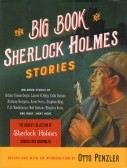
Case of the Unseen Hand" (1997) Included in: The Secret Cases of Sherlock Holmes (Donald Thomas); The Big Book of Sherlock Holmes Stories (Otto Penzler); Story Type: Pastiche Canonical Characters: Sherlock Holmes; Dr. Watson; Mrs Hudson; (Inspector Lestrade) Historical Figures: Alphonse Bertillon; Marguerite Steinheil; Louis Le Gall; Cardinal Richard; Albert I, Prince of Monaco; Abbé Renault (Prison Chaplain); Octave Hamard; (Félix Faure; Alfred Dreyfus; Colonel Max von Schwartzkoppen; Colonel Hubert Henry; Lemercier-Picard; Major Count Ferdinand Walsin-Esterhazy; Sir Francis Galton; Herbert Asquith; Colonel Picquart; Adolphe Stenheil; Kaiser Wilhelm II; émile Loubet; Georges Clemenceau; Rémy Couillard; Madame Japy; Adolphe Steinheil; Dr Victor Balthazard; Comte de Balincourt; De Valles) Other Characters: Hotel Manager; Messenger; Hotel Page-Boy; Paris Passers-by; Presidential Chamberlain; Cab Driver; (Bertillon's Assistants; Baptistin; Marius Longon "The Gypsy"; Monstet de Fontpeyrine; Hamard's Subordinates; Jurors) Date: January 1899 / May-November 1908 Locations: Aboard the Lord Warden; France; Paris; Boulevard Raspail; Hôtel Lutétia; Closerie des Lilas; Montparnasse; Avenue de la Grand Armée; Aubervilliers; Place de la République; Place de la Concorde; Rue de Vaugirard; Impasse Ronsin; Boulevard des Invalides; Pont Alexandre III; Elysée Palace; Gare de l'Est; 221B, Baker Street; Hamard's Office Story: Holmes and Watson travel to Paris to meet Bertillon. After an argument with him regarding the Dreyfus case, Holmes resolves to prove Dreyfus's innocence. He persuades President Faure to order a review of the evidence, on condition that, in return, Holmes remains in Paris to guard the manuscript of Faure's Secret History of France Under the Third Republic. Details of his task are brought to him by Marguerite Steinheil. The death of Faure gives them reason to leave Paris. Holmes returns to Paris later, when Steinheil is arrested for the murder of her husband and mother, to settle a score with Bertillon. |
|
|
|
|
"The
Case of the Yokohama Club" (1997) Included in: The Secret Cases of Sherlock Holmes (Donald Thomas) Story Type: Pastiche Canonical Characters: Sherlock Holmes; Dr. Watson; Mrs Hudson; (Inspector Lestrade) Historical Figures: Dr Jacob; George Scidmore; James Troupe; Mr Rentiers; Rachel Greer; Hanauye Asa; Mary Esther Jacob; Mr Justice Mowat; (Walter Raymond Hallowell Carew; Edith Mary Porch Carew; Harry Vansittart Dickinson; Carew's Doctors; Carew's Nurse; Elsa Christoffel; John Frederic Lowder; Professor Edwin Divers; Annie Luke; Mr Maruya; Julia Ferret; Josef Vanek; Ah Kwong; Ambassador Sir Ernest Satow) Other Characters: Cab Driver; Hercules; Mazeppa; Yokohama Club Members; Chinese Waiter; Japanese Girls; Jugglers; Librarian Date: End of 1896-1897 Locations: 221B, Baker Street; Egyptian Hall; Euston Station; Aboard the Parisian; Canada; St Lawrence River; Montreal; A Train; Kicking-Horse Pass; Vancouver; Aboard the Empress of India; Japan; Yokohama; The Bluff; The Yokohama United Club; British Naval Prison; 160, The Bluff Story: Holmes is consulted by Dr Jacobs, whose sister Mary has been accused of poisoning Walter Carew, her employer, and supposedly her lover, in Yokohama. Holmes travels to Japan. After interviewing the Carews' servants and meeting with Mary in prison, Holmes visits the murder site, Carew's bedroom. A perusal of the Club library gives Holmes his final piece of evidence. |
|
| "The
Case of the Zimmermann Telegram" (2009) Included in: Sherlock Holmes and the King's Evil (Donald Thomas) Story Type: Pastiche Canonical Characters: Sherlock Holmes; Dr. Watson; Mrs Hudson; ((Chief) Inspector Lestrade) Historical Figures: Sir John Fisher; Edward VIII; Queen Mary; George V; Count Alexander Benckendorff; Lord William Cecil; Sir Reginald Hall; Edward Bell; Sir Henry Jones; (Arthur Zimmermann; Count Bernstotff; Von Tirpitz; Wilhelm Wassmuss (German Vice-Consul in Persia); Admiral Beatty; Woodrow Wilson; Bethmann-Hollweg; Kaiser Wilhelm II; General John H. Pershing; Pancho Villa; Venustiano Carranza; Robert Lansing; James Gerard; Arthur Balfour; Heinrich von Eckhardt; Captain Guy Gaunt; Dr Page; Obidiah Jones) Other Characters: Watson's Spinster Cousins; Ball Guests; Footmen; Stout Young Man; Cyclist; Plain Clothes Sergeant; Watchers; Readers; Cab Driver; Rotterdam Hotel Hall-Porter; Rotterdam Cab Driver; Admiralty Staff; Mr Varney; Miss Varney; (Swiss Watch-Repairer; Swedish Bank Courier; Spanish Restaurateur; Tobacco Importer; Neutrals with German Sympathies; Daily Mail Editor; Coldstreams Officer; Danish Captain; Naval Attaché; Mexican Ambassador; British Minister in Mexico; Mexican Telegraph Functionary) Date: 1914-1917 Locations: 221B, Baker Street; Buckingham Palace; Baker Street; St James's Library; Piccadilly; Old Admiralty Yard; The Admiralty; Room 40; Holland; Rotterdam; Hotel; Quayside Brasserie; Restaurant; Naval and Military Club; Mexico City Story: Fisher uses a court ball as a cover to recruit Holmes and Watson into war work breaking German codes. They soon realise they are being followed as Holmes maintains the imposture of continuing his work on Lassus. Holmes arranges for Watson to be the main player in a plan to let Germany steal British ciphers from his hotel in Rotterdam. Holmes's task becomes more complex as the United States and Mexico become increasingly embroiled in Germany's plans for its U-boat fleet. A past case involving a printer, Varney, and counterfeit Mexican currency, gives Holmes an agent in Mexico. It is through Varney that the Zimmermann telegram comes into British hands. Holmes sets to decoding the encrypted message. His work leads to America entering the war. Holmes assists Sir Henry Jones in the matter of a mysterious postcard. |
|
|
 |
Death
on
a Pale Horse (2013) Holmes sends details of Rawdon Moran's career, which closely resembles that of his brother Sebastian, to Sir Melville Macnaghten. After qualifying as a military surgeon, Watson stops briefly in Cape Town en route to Afghanistan. In India, on the train to Lahore, he hears of Rawdon Moran's subaltern's court martial over his treatment of Emmeline Putney-Wilson. He lives through the Battle of Maiwand and returns to England, where he is introduced to Holmes. Watson receives a press clipping through the post, about the death of Captain Carey in India. Its sender, Reverend Dordona, calls at Baker Street, and tells Holmes and Watson of Carey's last hours, and his account of the death of Prince Louis Napoleon in Natal, and of a horseman, seen observing the killing from a kraal above. An early arrival at their assigned meeting with Dordona, the following day, reveals Lestrade in the midst of a murder investigation. Watson recognises the dead man from his time in India. An unpleasant surprise appears in Watson's bedroom. Mycroft reveals more background to the case and its links to the illegal arms trade to Africa. Holmes and Watson attend the Surrey and Suburban Stakes at Epsom to watch Silver Blaze run, and Watson has an encounter there with Moran. The case culminates aboard a cross-channel paddle-steamer, with Holmes and Watson attempting to prevent an attack on the heir to the French throne. NOTE: The reference to "Sir Henry Bowler" (P.55) should read "Sir Henry Bulwer". |
|
|
"The
Execution of Sherlock Holmes" (2007) |
|
|
|
|
"The
Ghost in the Machine" (1997) Included in: The Secret Cases of Sherlock Holmes (Donald Thomas) Story Type: Pastiche Canonical Characters: Sherlock Holmes; Dr. Watson Historical Figures: Louisa Bankes; Inspector Robert McIntyre; Dr Thomas Smethurst; Dr Bird; Dr Robert Bentley Todd; Mr Parry; Dr Richardson; Dr Rodger; Sir Frederick Pollock; Jurors; Hardinge Giffard, 1st Earl of Halsbury; Dr Alfred Taylor; Sir George Lewis; (Isabella Bankes; Mrs Smith; Dr Lane; Susannah Wheatley; Dr Frederick Gilder Julius; Mary Durham Smethurst; Mrs Wheatley; George Bankes; Mr Barwell; Sir Benjamin Brodie) Other Characters: Mrs Harris; Battersea Church Clerk; Smethurst's Maid; Old Bailey Spectators Date: A Sunday at the end of May - late August, 1859 Locations: Lambeth Palace Road; Battersea Church; Kennington; St Mark's Church; Piccadilly; White Horse Cellar; Richmond; 10, Alma Villas; The Old Bailey; St Thomas's Hospital; The Home Office; 221B, Baker Street Story: While lodging in Lambeth Palace Road, the young Holmes is called on by Louisa Bankes, a friend of his landlady, Mrs Harris. She tells him that she believes that her sister Isabella is being slowly poisoned by her husband, Dr William Smethurst. She cannot go to the police because her sister's marriage is a bigamous one. After gathering evidence of Smethurst's two marriages, he goes to visit him, but finds he has been arrested, and Inspector M'Intyre is on the scene. Holmes attends Smethurst's trial, but realises that a miscarriage of justice has been carried out, and sets out to right it. |
|
|
"The
Queen of the Night" (2007) |
|
|
|
"Sherlock
Holmes: The Actor" (2010) Included in: Sherlock Holmes and the Ghosts of Bly (Donald Thomas) Story Type: Pastiche Canonical Characters: Sherlock Holmes; Dr. Watson; Stanley Hopkins; Inspector Bradstreet Fictional Characters: Sasanoff Shakespeare Company Historical Figures: (Henry Irving; Edward VII; Sir Josiah Guest; Queen Victoria; Prince Albert; Thomas Edison; Oscar Wilde) Other Characters: Roland Gwyn; Stage Hands; Actors; Sir Henry Caradoc Price; ("Captain" Carnaby Jenks; Lady Myfanwy Price) Date: 1879-1881 Locations: Royal Herculaneum Theatre Story: Watson finds mementoes of Holmes's theatrical career in a trunk in the attic. He tells the life story of the actor-manager Caradoc Price. |
|
| "The Two 'Failures' of Sherlock
Holmes"
(2001) Included in: Sherlock Holmes and the Running Noose (Donald Thomas) Story Type: Pastiche Canonical Characters: Sherlock Holmes; Dr. Watson; (Inspector Lestrade; Mycroft Holmes; Mrs Hudson) Historical Figures: Arthur Newton; Hawley Harvey Crippen; Oscar Wilde; Sir George Lewis; (Archibald Bowker; Sir Edward Marshall Hall; Cora Crippen; Ethel Le Neve; Walter Dew; Herbert Bennett; Mary Jane Bennett; Oscar Slater; Marion Gilchrist; Havelock Ellis; Sir George Young; Dr Benjamin Jowett; Marquess of Queensberry; Lord Alfred Douglas; Albemarle Club Porter; Charles Humphreys; Sir Edward Carson) Other Characters: (Mrs Clatworthy) Date: October after Holmes's Retirement / August, 1910 / February, 1895 Locations: 221B, Baker Street; Bart's; Pentonville Prison Story: Having returned to Baker Street from his retirement in Sussex, Holmes shows Watson his records of two failed cases, kept in his tin box in the lumber room. Watson recounts Holmes's involvement in the Crippen case, and the trial of Oscar Wilde. |
|
|